Freelance web developer in Amsterdam
Updated
A web developer builds and maintains the website or platform your company runs on. I'm Ruben Bijker, an independent web developer in Amsterdam with more than 15 years of experience. I work with companies that need a fast, reliable website built by one accountable person, from first sketch to hosting.
Who hires me as a web developer
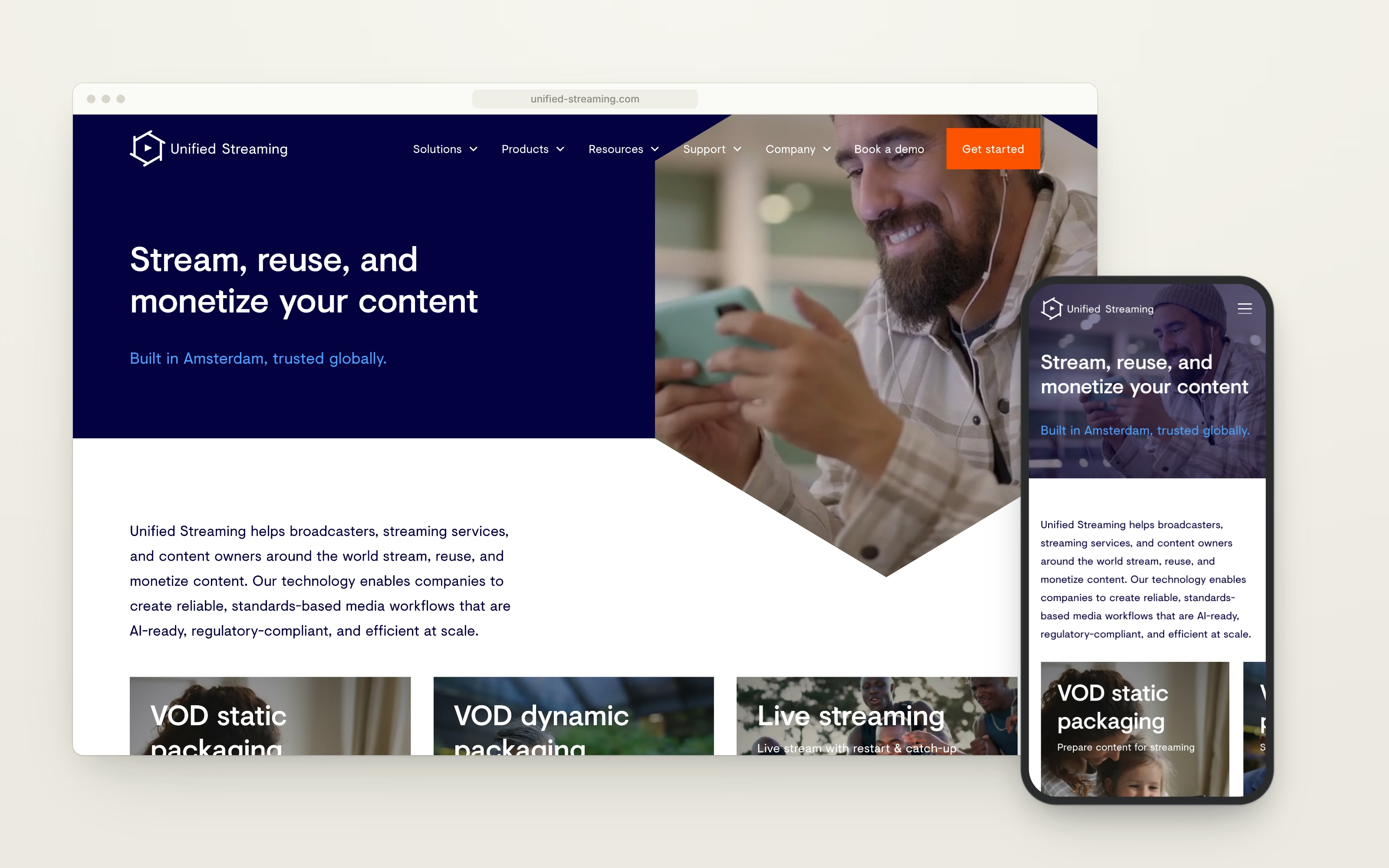
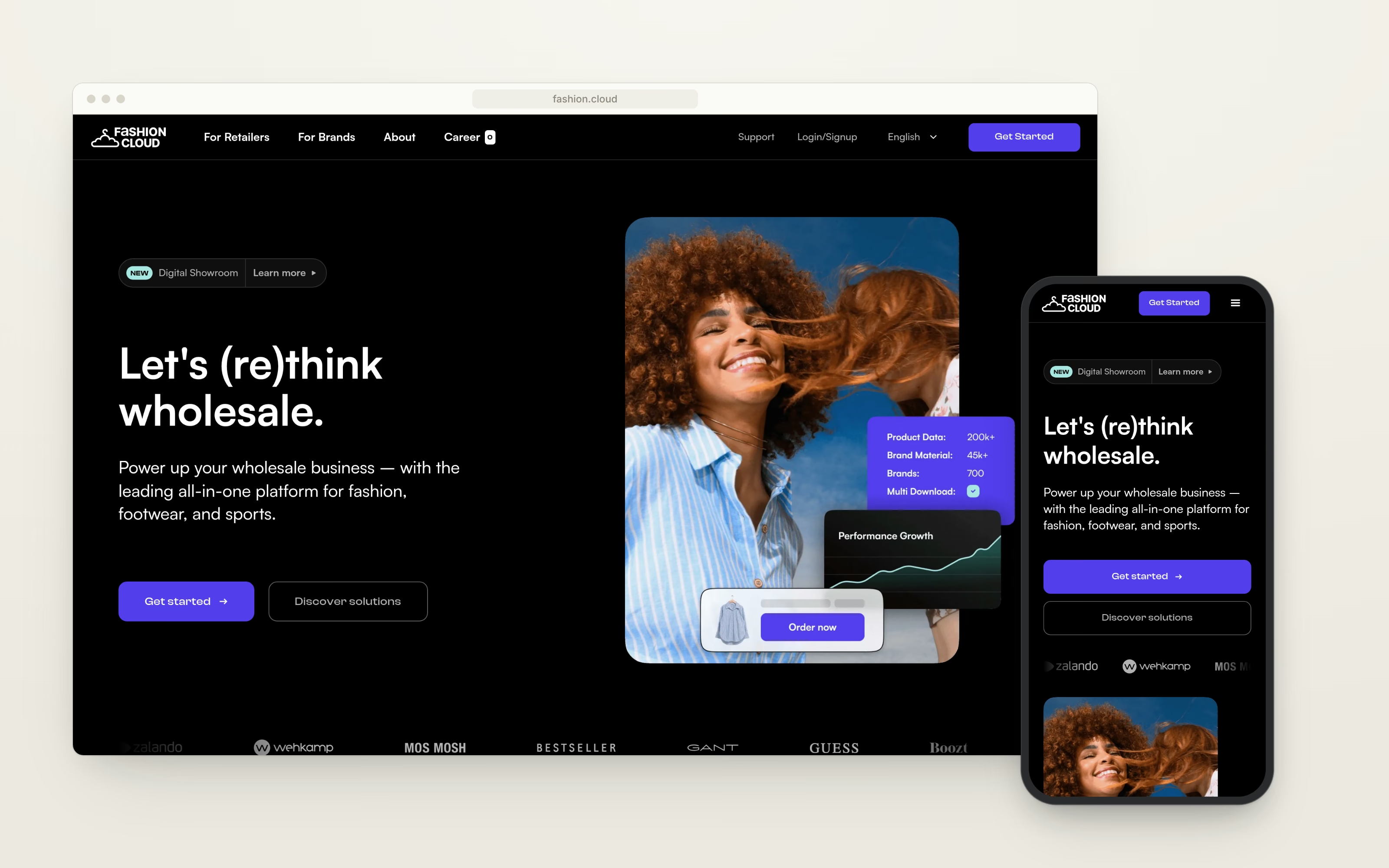
- Scale-ups and software companies that need a marketing site or product site that is fast, multilingual and easy for the team to update. Examples: Unified Streaming and Fashion Cloud.
- Companies with an existing design that needs a developer who builds exactly what was drawn and still thinks about performance and accessibility.
- Teams without a technical lead that want a second opinion on technology choices before they commit budget.
What you get
- A website built in the stack that fits your team: Next.js, Svelte, Laravel, or Webflow.
- Technical SEO and structured data set up from the start, so search engines and AI assistants can read your site.
- Performance, accessibility and multilingual support (for example Dutch and English) built in, not bolted on.
- Hosting, monitoring and maintenance, so you have one contact for everything.
How a project works
- Intake. A short conversation about your goals, audience and constraints. You get an honest answer on whether I'm the right fit.
- Scope and plan. A clear scope, timeline and price range before any build starts.
- Build in small steps. You see working software early and often, not only at the end.
- Launch and run. I take care of deployment, monitoring and later changes.
Why one experienced person, amplified by AI
I use AI tools to write much of the code, and I read and take responsibility for every change. That makes delivery faster without lowering the bar on architecture, security or maintainability. See AI-assisted development for how I keep quality up.
Related reading
- SSR, SSG, ISR and CSR: choosing a rendering strategy
- Web performance and Core Web Vitals
- Choosing a stack: Next.js, Laravel or Svelte
- Need something with accounts, data and logic? See web application development.
Examples of my work
Frequently asked questions
- What does a freelance web developer do?
- A freelance web developer designs the technical side of a website or platform, builds it, and often hosts and maintains it. As an independent you work with one person from first call to launch, instead of a team handing work between roles.
- Which technologies do you build websites with?
- I pick the tool that fits the job: Next.js and Svelte for custom front ends, Laravel and Python for back ends, Directus or Supabase for content and data, and Webflow when your team needs to edit the site without a developer.
- Do you also host and maintain the website?
- Yes. I host on Vercel or on a self-hosted Dokploy setup on Digital Ocean, Google Cloud, OCI or AWS, with error tracking from day one, so problems are found by me before your visitors find them.
- Can you work with our existing design or team?
- Yes. I regularly build from existing Figma designs and have worked as part of larger teams, for example on the front end of Vrij Nederland.
- Will my website be found in Google?
- I build with technical SEO in mind: semantic HTML, fast loading, correct metadata, structured data, sitemaps and clean URLs. Rankings also depend on your content, but the technical foundation will not hold you back.
Have a project in mind?
Tell me briefly what you need. You get an answer from me, not from a sales team.
Get in touchKeep reading
- SSR, SSG, ISR and CSR: choosing a rendering strategy
What server-side rendering, static generation, incremental regeneration and client-side rendering actually do, and how to pick the right one per page.
- Choosing a web stack: Next.js, Laravel or Svelte?
A technical comparison of Next.js, Laravel, SvelteKit and Webflow: where each is strong, where it hurts, and which questions actually decide the choice.
- Web performance and Core Web Vitals: what to optimise first
A practical guide to LCP, INP and CLS, and the techniques that move them: images, fonts, JavaScript, caching and measurement.
- AI-assisted development: a workflow that keeps quality up
How to use AI coding tools in real web projects: where they help, where they fail, and the review, testing and architecture habits that keep code maintainable.